

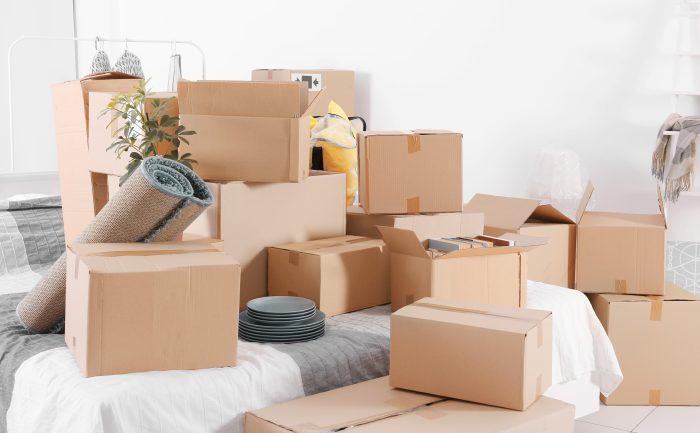
How to choose the right boxes for your move
The right moving boxes depend on what you’re packing, how heavy the items are, and whether they’ll go into storage after the move. Use smaller boxes for heavy items like books, medium boxes for general household belongings, and specialist boxes for things like TVs, clothes, and documents.
Getting this right from the start protects your belongings and makes unpacking far less chaotic. Here’s everything you need to know before you start.
What moving boxes do you need?

Not all moves are the same, and neither are the boxes required for them. The key is matching the box to what goes inside it, not just grabbing whatever’s available.
Before you start, think about:
- How many rooms you’re packing: A single room and a full four-bedroom house need very different quantities.
- Whether you have heavy items: Books, tools, and kitchen appliances need smaller, sturdier cartons.
- Whether any belongings are fragile or oddly shaped: These need specialist packaging rather than a standard box.
- Whether boxes will go straight to a new home or into a storage unit: Storage-bound boxes benefit from uniform sizing for easier stacking.
Getting that picture clear early means fewer trips to buy more supplies mid-move.
What are the different types of moving boxes?
Standard cardboard moving boxes come in small, medium, large, and extra-large sizes. These suit most household items and form the backbone of any move.
Specialty boxes are designed for specific belongings:
- Wardrobe boxes: Tall boxes with a hanging rail inside. Clothes go straight from the wardrobe without folding, saving time and reducing creasing.
- TV and picture boxes: Flat, reinforced cartons built to protect screens and framed artwork during transit.
- Document boxes: Sized for standard A4 files and folders. Sturdy enough to stack and easy to label by category.
- Book boxes: Smaller, reinforced cartons that handle the weight of books without the base giving way.
- Porta-robes: A lighter version of the wardrobe box, better suited for shorter garments or seasonal clothing.
If you’re using packing boxes for moving and some will go into self storage, uniform sizes stack better and make the most of the vertical space in your unit.
How many moving boxes do I need when moving house?
As a rough starting point, use these ranges and adjust based on how much you own:
- Studio or one-bedroom: 15 to 25 boxes
- Two-bedroom home: 30 to 45 boxes
- Three-bedroom home: 50 to 70 boxes
- Four or more bedrooms: 75 boxes or more
These ranges assume a typical volume of belongings and reasonable packing efficiency. Households with more books, kitchenware, or home office equipment will generally need more.
A practical approach is to walk through each room and estimate per room before buying. It’s better to have a few extra than to run short halfway through a kitchen. Our moving house checklist can help you plan the rest of the move.
How to choose the right moving box sizes
Understanding moving box sizes makes it easier to match each carton to the weight and volume of what you’re packing.
- Small boxes (around 1.5 cubic feet): Best for heavy items such as books, canned goods, tools, and anything dense. A box that’s too large becomes dangerously heavy when filled with these items.
- Medium boxes (around 3 cubic feet): The most versatile size. Suitable for kitchen items, toys, small electronics, linen, and general household goods.
- Large boxes (around 4.5 cubic feet): For lighter but bulkier items such as pillows, doonas, lampshades, and large soft furnishings. Keep the weight manageable.
- Extra-large boxes: Best kept for very bulky, lightweight items and may require two people to move safely.
- Specialty boxes: Match the item to the carton. A standard large box won’t protect a flat-screen TV, and a wardrobe box is significantly easier than folding and refolding clothes at the other end.
For packing boxes that will go into storage, stick to small and medium sizes. They stack more reliably and are easier to move when retrieving specific items later.
How to pack moving boxes safely

Packing well takes slightly more time upfront and saves considerably more time at the other end. For whole-of-home advice, see our packing tips for moving house.
- Pack heavy items at the bottom, lighter items on top: This applies both within individual cartons and when stacking in a vehicle or storage unit.
- Fill boxes fully: A partially filled carton is more likely to collapse when stacked. Use packing paper, bubble wrap, or linen to fill any gaps.
- Don’t overfill: The lid should close flat. If it’s bowing upwards, remove a few items.
- Wrap fragile items individually: Plates wrapped in packing paper and stacked vertically are significantly less likely to break than those packed flat.
- Reinforce the base on heavier cartons: An additional strip of packing tape on the base adds security for denser loads.
- Keep like items together: Everything from one room in one carton makes unpacking logical rather than a scavenger hunt.
For storage boxes going into personal storage for a longer period, consider wrapping textiles and documents in sealed plastic bags before boxing them. This adds a layer of protection against dust over time.
How to label moving boxes for easy unpacking
Labelling takes a few minutes per carton and saves hours at the other end.
- Write the room on every side: Not just the top. When stacked, you’ll want to read the label without moving everything.
- Add a brief contents description: “Kitchen, pots and pans” is more useful than “Kitchen” alone.
- Mark fragile cartons clearly: Indicate which side faces up and write FRAGILE on at least two sides.
- Number your boxes and keep a simple list: If something goes missing, you’ll know immediately rather than discovering it weeks later.
For cartons going into a storage unit, label them on the side facing the aisle. A colour-coded system by room or category makes locating items faster on return visits.
What to do with moving boxes after the move
- Reuse them: Good-condition cartons can be broken down flat and kept for future moves or online selling.
- Pass them on: Friends or community groups often need boxes for moving house. Passing them along saves someone else the cost.
- Recycle them: Cardboard moving boxes are recyclable. Break them down flat before putting them out.
- Store a set: If you’re using self storage during or after the move, keeping flat-packed cartons in your unit means you have them ready if you need to reorganise or add items later.
Where to buy moving boxes in Sydney
Rent a Space stocks a range of packing supplies through our Box Shop, available at all Sydney facilities. This includes cardboard moving boxes in various sizes, packing tape, bubble wrap, mattress protectors, and furniture covers.
Buying your supplies from the same place you’re storing means one trip, not two. And if you’re a new customer using our free truck and driver move-in service, you can pick up packing supplies at the facility before you load up.
You can find Rent a Space facilities across these Sydney regions:
- Airport & Southern Sydney
- Inner West
- Northern Sydney & Northern Beaches
- Western Suburbs
- South Western Sydney
- Sutherland Shire
- Macarthur
- Hills District & North West
Moving house? Let us handle the heavy lifting. Our team is here to help you find the right unit and the right supplies to make the move as straightforward as possible.
Frequently asked questions
The best carton depends on the item. Use strong smaller boxes for dense or heavy items like books, cookware, and tools. Medium cartons suit most general household items. Specialty boxes are worth using for items that won’t pack safely into a standard size.
It depends on your home’s size and how much you own. As a rough starting point, a one-bedroom home may need around 15 to 25 boxes, while larger homes generally require more. Walk through each room and estimate per room for a more accurate count.
Small cartons are best for heavy items: books, documents, pantry goods, tools, and small kitchen appliances. Keeping weight manageable in smaller boxes makes them safer to carry and less likely to fail at the base.
Rent a Space has a Box Shop at all Sydney locations stocking packing boxes, tape, bubble wrap, and protective covers. Available to all customers and easy to collect on the day of your move.
Yes. Clearly labelled, well-packed cartons are ideal for storage units. Uniform sizes stack efficiently and make the most of vertical space. Label on the side rather than just the top so you can read them without moving everything.